

FTP4-1X1
Feed through entry panel, 102mm (4"), 1 hole, 1x1
Rev : D | Rev date : 15 Nov 2025
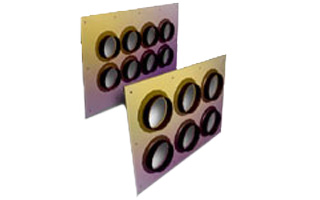
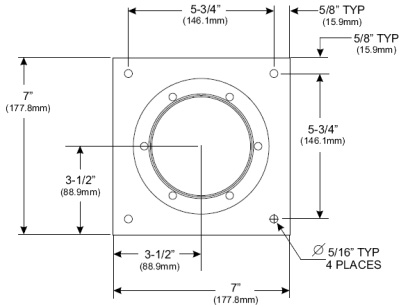
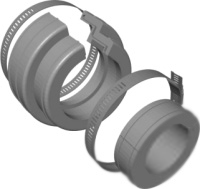
Aluminum feed through entry panels enable transmission line runs to enter buildings and shelters. These rugged panels guide the transmission line at the entry point and prevent moisture from entering the building. Each panel features 102mm (4"") openings to accept boot assemblies. Feed through panels are offered with a broad selection of hole patterns and plate sizes to match your exact application. These entries can be used in both interior and exterior wall applications to create a neat and clean installation. Each panel includes a set of wall attachment hardware, including stainless steel screws, finishing washers and plastic anchors and is powder coated to ensure long term integrity and provide appealing aesthetics. Protection caps for all unused openings are also included. These caps are only dust protection offered. For water proofing suitable additional measures, e.g. tape wrap. Boot assemblies are purchased separately to accommodate specific transmission line requirements.
Technical features
Structure
|
|||
|
Mechanical Specifications
|
||
|
Packaging Information
|
|
|
|
External Document Links |
|
Notes |
PDF Datasheet
Related Products
EP78J
- Typical Operating Band - lower frequency
- 7.1
- Typical Operating Band - upper frequency
- 8.5
E78J
- Typical Operating Band - lower frequency
- 7.1
- Typical Operating Band - upper frequency
- 8.5
EP65J
- Typical Operating Band - lower frequency
- 5.9
- Typical Operating Band - upper frequency
- 7.125
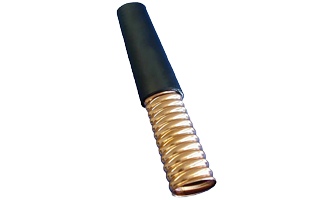
EP130J
- Typical Operating Band - lower frequency
- 10.7
- Typical Operating Band - upper frequency
- 13.25
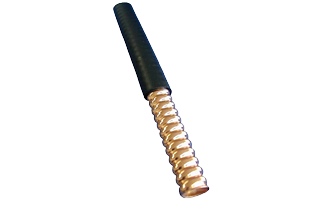
EP185J
- Typical Operating Band - lower frequency
- 17.3
- Typical Operating Band - upper frequency
- 19.7
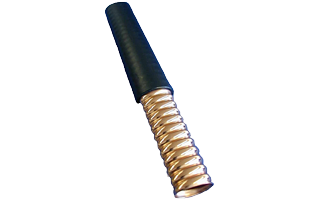
EP150J
- Typical Operating Band - lower frequency
- 13.4
- Typical Operating Band - upper frequency
- 15.35
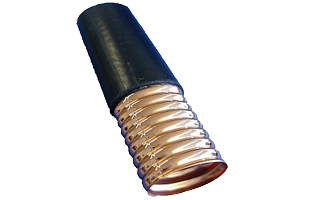
EP60J
- Typical Operating Band - lower frequency
- 5.6
- Typical Operating Band - upper frequency
- 6.425
EP60JFN
- Typical Operating Band - lower frequency
- 5.6
- Typical Operating Band - upper frequency
- 6.425
E65J
- Typical Operating Band - lower frequency
- 5.9
- Typical Operating Band - upper frequency
- 7.125
E130J
- Typical Operating Band - lower frequency
- 10.7
- Typical Operating Band - upper frequency
- 13.25
E185J
- Typical Operating Band - lower frequency
- 17.3
- Typical Operating Band - upper frequency
- 19.7
E150J
- Typical Operating Band - lower frequency
- 13.4
- Typical Operating Band - upper frequency
- 15.35
E60J
- Typical Operating Band - lower frequency
- 5.6
- Typical Operating Band - upper frequency
- 6.425
EP78JFN
- Typical Operating Band - lower frequency
- 7.1
- Typical Operating Band - upper frequency
- 8.5
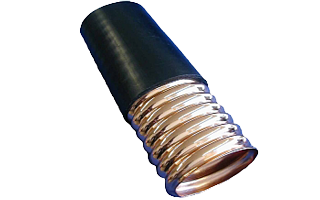
ES46J
- Typical Operating Band - lower frequency
- 4.4
- Typical Operating Band - upper frequency
- 5
- Cut-off Frequency
- 3.08GHz
EP65JFN
- Typical Operating Band - lower frequency
- 5.9
- Typical Operating Band - upper frequency
- 7.125
ESP46J
- Typical Operating Band - lower frequency
- 4.4
- Typical Operating Band - upper frequency
- 5
EP130JFN
- Typical Operating Band - lower frequency
- 10.7
- Typical Operating Band - upper frequency
- 13.25
ESP46JFN
- Typical Operating Band - lower frequency
- 4.4
- Typical Operating Band - upper frequency
- 5